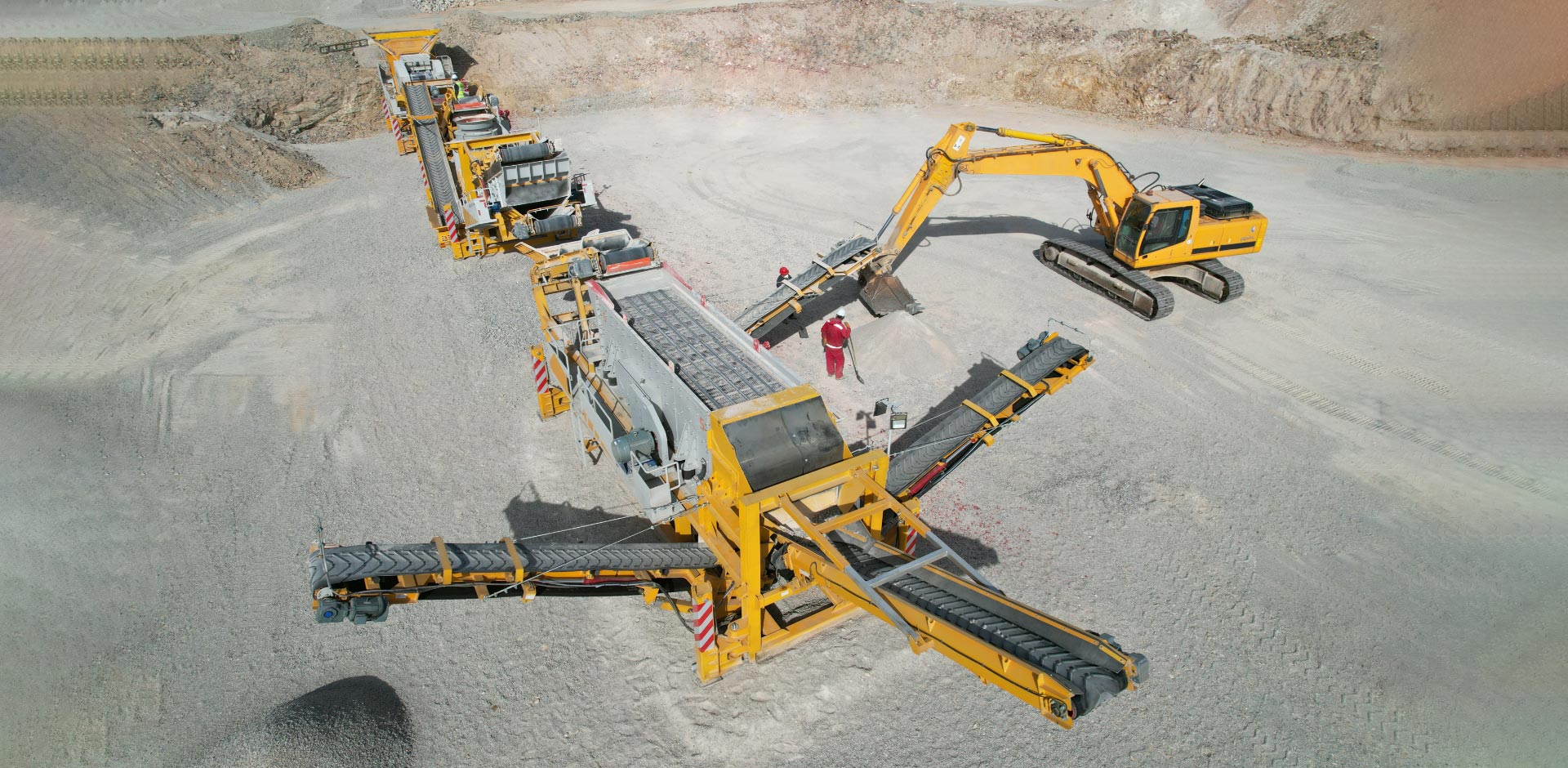
The acquisition of a 200 TPH stone crusher represents a significant capital commitment, often exceeding the combined value of several other pieces of mobile equipment in a quarrying fleet. Yet surprisingly few operators can answer a deceptively simple question with confidence: is that machine actually making money? The distinction between a crusher that functions and one that generates meaningful return on investment is rarely visible on the machine’s control panel or in the monthly production log. It resides instead in the interplay of throughput consistency, wear parts economics, downtime allocation, and product mix optimization.
A 200 TPH crusher operating at 70 percent efficiency with an unfavorable product split is, in financial terms, a considerably smaller machine than its nameplate suggests. Conversely, a well-configured unit running at 85 percent utilization with optimal gradation output can deliver returns that justify its purchase 200 TPH stone crusher price within eighteen to twenty-four months. This ROI breakdown examines the specific levers that separate profitable crushing operations from those that quietly erode equity, offering a framework for diagnosing whether your current machine—or the one you intend to purchase—will function as a profit engine or devolve into a money pit.
Calculating True Throughput: Beyond the Nameplate Rating
Understanding the Gap Between Theoretical and Actual Production
The “200 TPH” designation affixed to your crusher represents an optimal condition rarely encountered in real-world quarrying. This theoretical maximum assumes continuous feed of ideal material—correctly sized, properly graded, with optimal moisture content and hardness—and ignores the inevitable interruptions that characterize actual operations. To calculate true throughput, one must apply a utilization factor that accounts for three categories of loss. Feed-related losses occur when material varies from the crusher’s ideal specifications; oversized boulders cause bridging at the feed opening, while wet, sticky material blinds screens and reduces open area for material passage. Operational losses stem from operator decisions: inconsistent feed rates, failure to adjust crusher settings as wear progresses, and inefficient sequencing of loader cycles. Downtime losses include scheduled maintenance, unscheduled breakdowns, and shift changeovers. A realistic assessment of these factors typically reduces effective throughput to between 130 and 160 TPH for even well-managed operations. The gap between nameplate rating and actual production is the first indicator of whether your crusher is performing as a profit engine or merely consuming capital while delivering diminished returns. Closing this gap requires systematic measurement: install belt scales or weighbridge systems to track actual tons processed per shift, and maintain detailed logs of downtime events categorized by cause.
Calculating Your Effective Cost Per Ton
Once actual throughput is established, the next calculation determines the effective cost per ton—the metric that ultimately dictates profitability. Begin with fixed costs: depreciation (typically calculated over five to seven years), interest on capital (if financed), insurance, and basic site overhead allocation. Add variable costs: diesel or electric power consumption per ton, wear parts consumption (jaw dies, mantle and concave, blow bars, screens), lubricants, and maintenance labor. The sum of these costs, divided by your actual monthly tonnage, yields your true cost per ton. A 200 TPH stone crusher machine operating at 150 TPH actual throughput with a cost structure of GHS 45 per ton (using Ghanaian market reference) generates radically different margins than the same machine at 120 TPH with GHS 60 per ton costs. The former may produce healthy returns; the latter may barely cover operating expenses. Tracking this metric weekly rather than monthly allows operators to identify deterioration before it becomes entrenched, adjusting feed practices or maintenance schedules to restore profitability.
The Wear Parts Economy: Hidden Levers of Profitability
Matching Alloy Selection to Material Characteristics
Wear parts represent the single largest variable cost in crushing operations, often accounting for 30 to 40 percent of total operating expenses over the machine’s life. Yet many operators default to standard manganese steel components without analyzing the specific abrasiveness and impact characteristics of their feed material. This oversight transforms a potential profit lever into a silent money drain. For crushing highly abrasive materials such as granite, basalt, or quartzite, high-chrome alloys or manganese with added chromium and molybdenum significantly extend wear life, reducing changeout frequency and associated downtime. The premium for these upgraded alloys—typically 20 to 30 percent above standard components—is rapidly recovered through extended service intervals. Conversely, for softer materials such as limestone or recycled concrete, standard manganese may provide adequate wear life, and the premium for high-chrome alloys becomes unnecessary expenditure. The optimal alloy selection also depends on the crusher type: mobile jaw crushers processing highly abrasive feed benefit from manganese with 18 to 22 percent manganese content, while impact crushers handling less abrasive materials may perform well with 14 percent manganese. Engaging with your wear parts supplier to analyze your specific feed material and running controlled trials of different alloys typically yields a 15 to 25 percent reduction in cost per ton for wear components.
Strategic Inventory and Changeout Scheduling
Even with optimal alloy selection, wear parts management directly impacts profitability through inventory carrying costs and downtime duration. Carrying excessive spare parts inventory ties up capital that could be deployed elsewhere, while insufficient inventory risks extended downtime when components wear unexpectedly. The solution lies in predictive wear monitoring. Measure critical wear components weekly, tracking wear rates against operating hours, to forecast changeout dates with precision. This data allows for just-in-time inventory ordering—components arrive days before needed rather than months in advance. Additionally, schedule changeouts to coincide with planned maintenance events or periods of lower production demand, minimizing lost production. Some operators maintain a second set of critical wear parts (jaw dies, blow bars) that can be swapped during extended maintenance periods, allowing worn components to be rebuilt off-site without extending downtime. This approach carries higher inventory costs but may be justified for operations where downtime costs exceed inventory carrying expenses.
Product Mix Optimization and Market Positioning
Capturing Premium Prices Through Specification Control
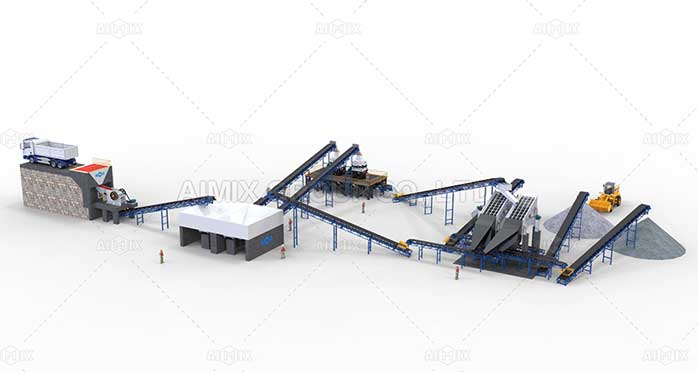
A 200 TPH crusher that produces only ungraded fill material operates at the commodity end of the market, competing almost exclusively on price. The same machine, configured to produce multiple well-graded products—such as ¾-inch base course, ⅜-inch concrete aggregate, and manufactured sand—accesses premium price points that can increase revenue per ton by 30 to 50 percent. Achieving this product flexibility requires investment in screening capacity and, in some cases, additional crushing stages. A two-stage configuration (jaw followed by cone or impact crusher) with triple-deck screening can typically produce three to four finished products simultaneously. The capital required for this additional equipment must be weighed against the revenue uplift, but for many operations, the payback period ranges from six to twelve months. Furthermore, consistent product grading reduces rejection rates from asphalt plants and ready-mix producers, who increasingly enforce strict specification compliance. A reputation for reliable specification control allows operators to command premium pricing and secure longer-term supply agreements, transforming the gravel crusher from a commodity producer into a value-added partner in the construction supply chain.
Reject Reduction and Quality Consistency
Rejected material—product that fails to meet customer specifications—represents pure loss. It has consumed crushing energy, wear parts, and labor but cannot be sold at full price, if at all. Reducing reject rates requires systematic quality monitoring at the point of loading. Install sampling points at each product conveyor and implement a testing protocol that checks gradation at minimum twice per shift. When gradation drifts outside specification, immediate adjustments to crusher settings or screen deck configurations can correct the issue before significant off-spec material accumulates. Track reject rates as a key performance indicator, investigating any upward trend. A reduction in reject rates from 5 percent to 2 percent increases effective revenue by approximately 3 percent with no additional production cost—a direct translation of quality management into bottom-line profit. For a 200 TPH operation running 4,000 hours annually, this improvement represents tens of thousands of tons of additional saleable product each year, transforming a crusher that merely produces into one that consistently profits.