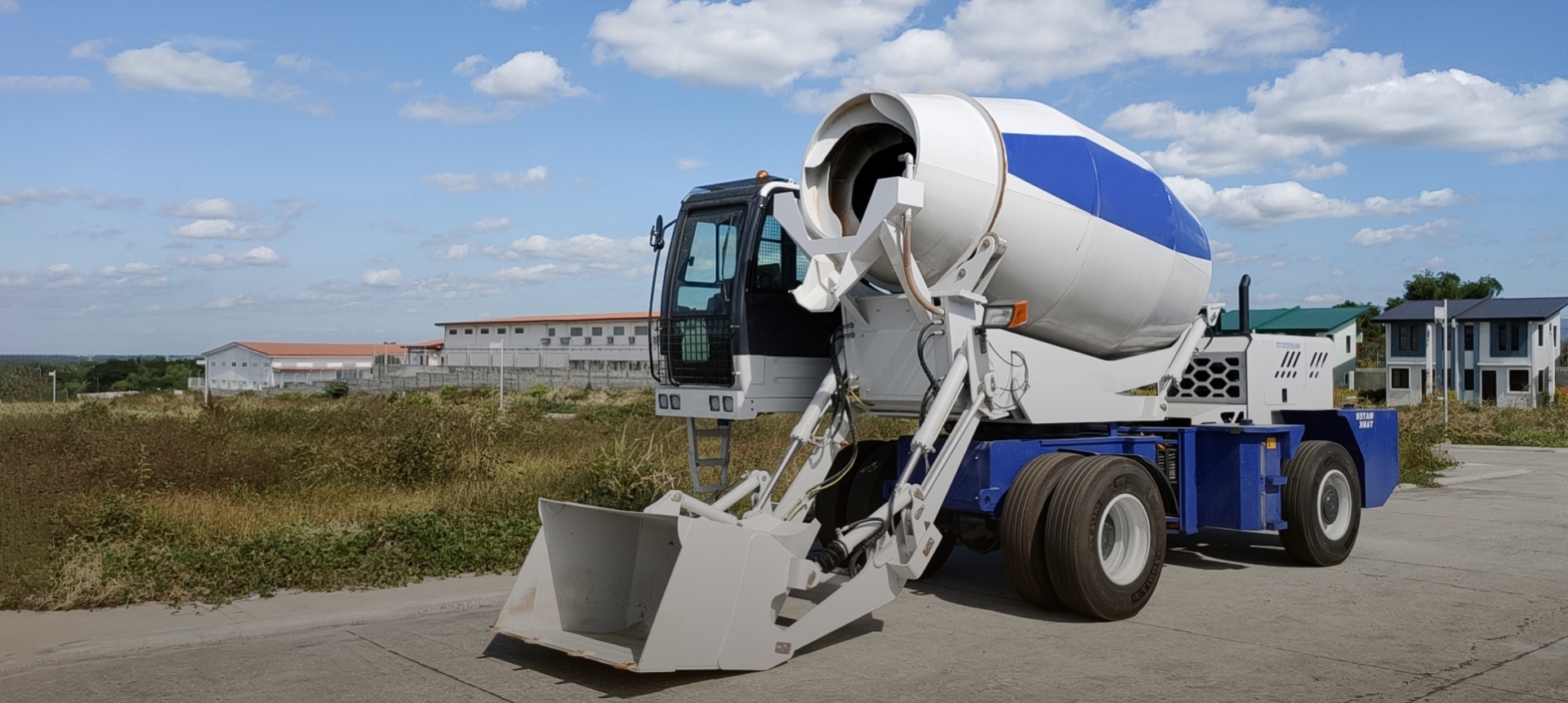
For decades, the Latin American construction industry relied heavily on large-scale ready-mixed concrete suppliers to fuel urban expansion. However, as infrastructure projects move into more remote regions and urban logistics become increasingly congested, a significant shift is occurring. Construction firms are moving away from the rigid schedules of external suppliers and toward the autonomy of on-site production. At the heart of this transformation is the self-loading concrete mixer(autohormigonera)—a versatile, all-in-one machine that combines the functions of a batching plant, loader, and transit mixer. This evolution is particularly evident in the rugged terrains and burgeoning markets of the Andean region.
The Decline of Ready-Mixed Reliance
The traditional ready-mixed concrete model thrives in stable, accessible environments. In the bustling centers of Lima or Santiago, the model is efficient until it encounters the reality of Latin American logistics. Heavy traffic, unpredictable road closures, and the perishable nature of wet concrete mean that any delay can lead to compromised material quality or the total loss of a load. For developers, the lack of control over the supply chain has become a bottleneck that inflates costs and extends timelines.
Logistical Bottlenecks in Developing Zones
In many parts of South America, the “last mile” of construction is the hardest. Getting a massive 8×4 transit mixer through narrow colonial streets or up unpaved mountain slopes is often impossible. This logistical ceiling has forced contractors to look for a more agile alternative. By producing concrete on-demand at the job site, firms eliminate the stress of the “ticking clock” associated with pre-mixed deliveries.
The Rise of the Self-Loading Concrete Mixer
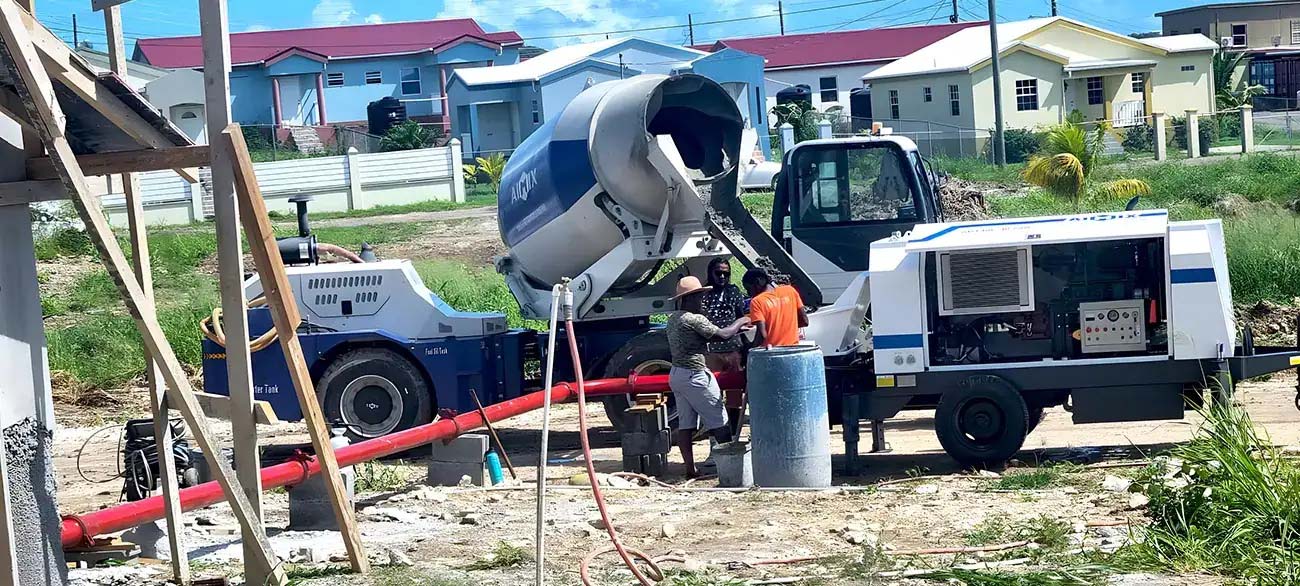
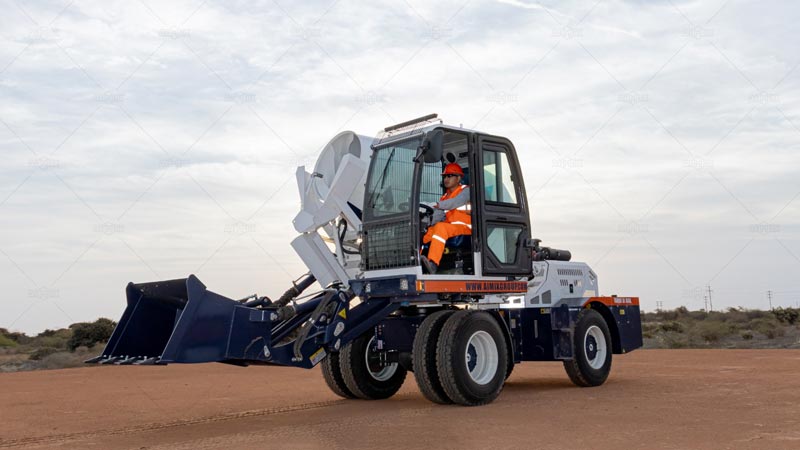
The self-loading concrete mixer has emerged as the ultimate solution for this paradigm shift. Unlike a standard truck mixer, which requires an external loader to fill its drum and a separate batching plant to measure ingredients, the self-loading unit is entirely autonomous. It can load its own aggregates, weigh them using internal digital scales, add water and cement, mix the batch while driving, and discharge it exactly where it is needed.
Versatility Across Terrains
One of the primary drivers for this equipment’s popularity is its off-road capability. Most of these machines feature 4×4 drive systems and articulated steering, allowing them to navigate the mud, sand, and steep inclines common in greenfield projects. This versatility ensures that the concrete is fresh, regardless of how remote the site may be.
Market Dynamics: Self-Loading Concrete Mixer in Peru
Peru has become a flagship market for this technology. From the coastal deserts to the high-altitude mines in the Andes, the self-loading concrete mixer in Peru(la autohormigonera Perú) is now a common sight on medium-sized infrastructure projects. The Peruvian government’s push for decentralized infrastructure—building schools, bridges, and clinics in rural provinces—has created a massive demand for machines that don’t require a nearby concrete plant.
Adapting to Peruvian Infrastructure
In the Peruvian highlands, where oxygen levels are low and terrain is treacherous, the compact size of the self-loading mixer is its greatest asset. It allows for the construction of irrigation canals and rural roads where a traditional concrete truck would simply be too heavy or too wide to pass. Local contractors have found that owning their supply chain is the only way to ensure project continuity in the face of Peru’s diverse geography.
Economic Shifts in Chile
Similarly, the self-loading concrete mixer Chile market is experiencing a surge. Chile’s construction sector is characterized by high standards of efficiency and a rigorous focus on labor costs. While the initial price of self-loading concrete mixer(precio de autohormigonera) units may seem like a significant investment, Chilean firms are calculating the long-term ROI based on reduced labor and eliminated delivery fees.
Labor Efficiency and Cost-Benefit Analysis
A single operator can manage the entire concrete production process with a self-loading unit. In Chile, where skilled labor can be expensive, the ability to replace a three-man crew (loader driver, truck driver, and plant operator) with one machine is a game-changer. Furthermore, because the concrete is mixed as needed, there is zero waste. Any contractor who has had to pay for a “hot load” of ready-mixed concrete that set in the truck during a protest or traffic jam understands the immediate financial benefit of on-site production.
Analyzing the Price of Self-Loading Concrete Mixer Units
For many small to medium-sized enterprises (SMEs), the price of self-loading concrete mixer equipment is the deciding factor. While the upfront cost is higher than a standard small mixer, it is significantly lower than purchasing a separate loader and a transit truck.
Factors Influencing Cost
- Capacity: Units typically range from 1.2m³ to 5.5m³ per batch.
- Technology: High-end models feature GPS tracking and automated weighing systems that print receipts for every batch.
- Engine Specifications: High-altitude versions for Andean work may carry a premium but are essential for maintaining torque at 4,000 meters.
When factoring in the saved “delivery premiums” charged by ready-mixed companies, most firms in Latin America report that the machine pays for itself within 6 to 12 months of active use.
Impact on Construction Quality and Customization
Beyond logistics and cost, the shift to on-site production allows for a higher degree of customization. When using a self-loading concrete mixer, the operator can adjust the slump and the mix design for each specific part of the project. If a section of a foundation requires a different additive or a drier mix than the previous hour’s pour, the change can be made instantly on-site without coordinating with a distant dispatch center.
Consistency Through Technology
Modern machines used in the self-loading concrete mixer Chile(mercado de autohormigonera en Chile) and Peru markets are equipped with sophisticated weighing sensors. This ensures that the water-cement ratio is consistent across every batch, meeting the stringent seismic building codes prevalent in both countries. This precision was previously only available from large-scale batching plants, but it is now accessible to the local contractor.
Conclusion: A More Autonomous Future
The construction landscape in Latin America is no longer defined by the reach of the ready-mixed truck. By embracing the self-loading concrete mixer, contractors in Peru, Chile, and beyond are reclaiming control over their schedules, their costs, and their material quality. As the price of self-loading concrete mixer technology becomes more competitive and the machines themselves become more robust, the transition from reliance to independence is set to accelerate. For the modern Latin American builder, the ability to produce concrete anywhere—from a remote mountain pass to a congested city alleyway—is not just a convenience; it is a competitive necessity.