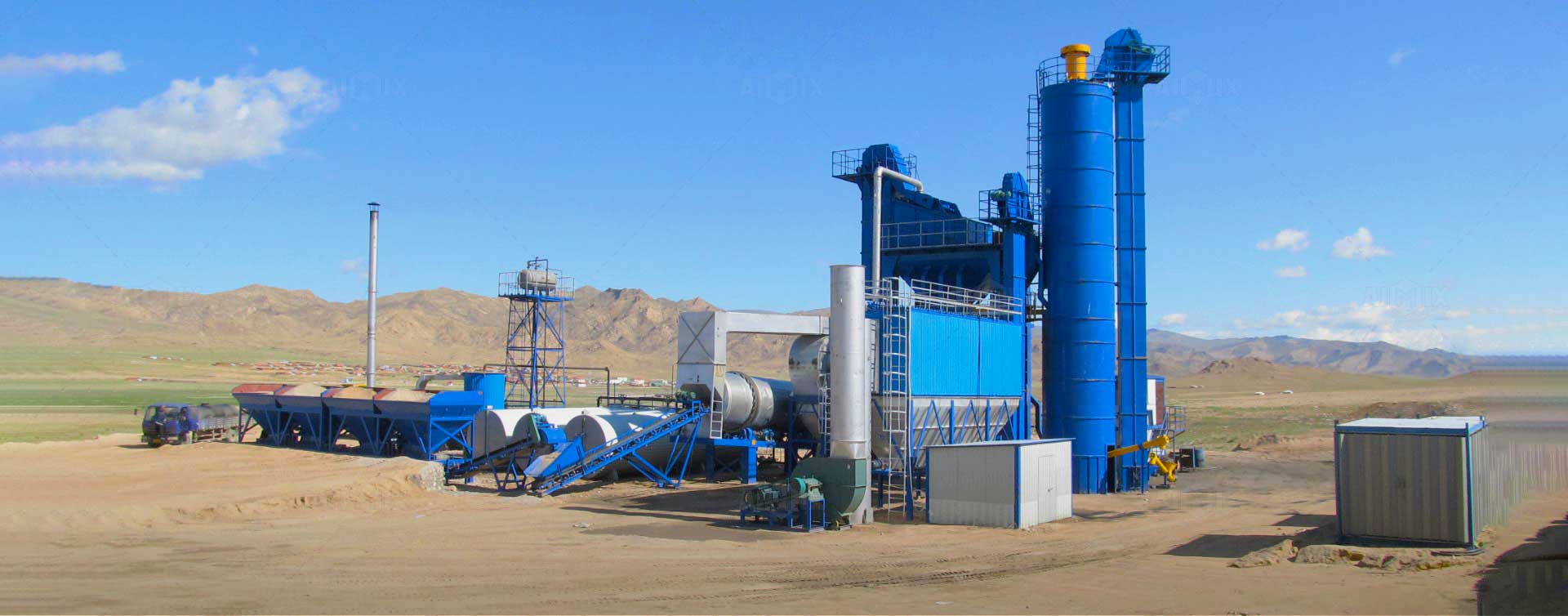
Evaluating a heavy-duty asphalt plant for sale for remote Indonesian highway construction contracts requires engineering firms to demand precise modular shipping dimensions from international asphalt mixing plant manufacturers, since archipelago geography creates transport constraints that mainland infrastructure projects never encounter. Inter-island shipping logistics, limited port crane capacity, and narrow rural road access collectively determine whether equipment can reach remote deployment sites at all. Simultaneously, eliminating massive concrete foundations through modular framing fundamentally justifies local harga asphalt mixing plant setup investment, since foundation elimination removes the single largest cost and timeline barrier facing highway construction programs across Indonesia’s dispersed regional networks.
Modular Dimensions Define Archipelago Deployment Feasibility
International asphalt mixing plant manufacturers must engineer equipment subassemblies fitting within standard 20-foot and 40-foot container dimensions, since Indonesian inter-island shipping relies heavily on container vessel networks connecting Java, Sumatra, Kalimantan, and eastern provinces. An asphalt plant for sale exceeding standard container width of 2.35 meters faces severe logistical penalty, requiring specialized flatbed vessels with limited sailing schedules and substantially higher freight cost.
Specifically, engineering firms should demand that drum assemblies separate into sections not exceeding 2.3 meters width and 12 meters length, accommodating both container shipping and the narrow rural road networks common across highway construction corridors in Sumatra and Kalimantan. Component weight per module should remain below 18,000 kilograms, matching typical port crane capacity at smaller regional harbors lacking heavy-lift infrastructure available only at major terminals like Tanjung Priok or Tanjung Perak.
From a logistics perspective, asphalt mixing plant manufacturers providing detailed module breakdown documentation — including individual component weight, dimensional drawings, and crane lift-point specifications — enable accurate freight cost forecasting before contract commitment. Conversely, equipment lacking modular engineering forces expensive special transport arrangements that can add 20 to 30 percent to total project mobilization cost across remote archipelago deployment routes.
Foundation Elimination Reshapes Investment Calculation
Conventional asphalt plant for sale installations requiring permanent concrete foundations demand 400 to 600 cubic meters of reinforced concrete, a substantial burden across Indonesian regions where cement supply chains remain inconsistent and remote highway construction sites frequently lack reliable concrete batching access. Foundation curing alone consumes 21 to 28 days, delaying project mobilization during already compressed construction seasons affected by monsoon timing.
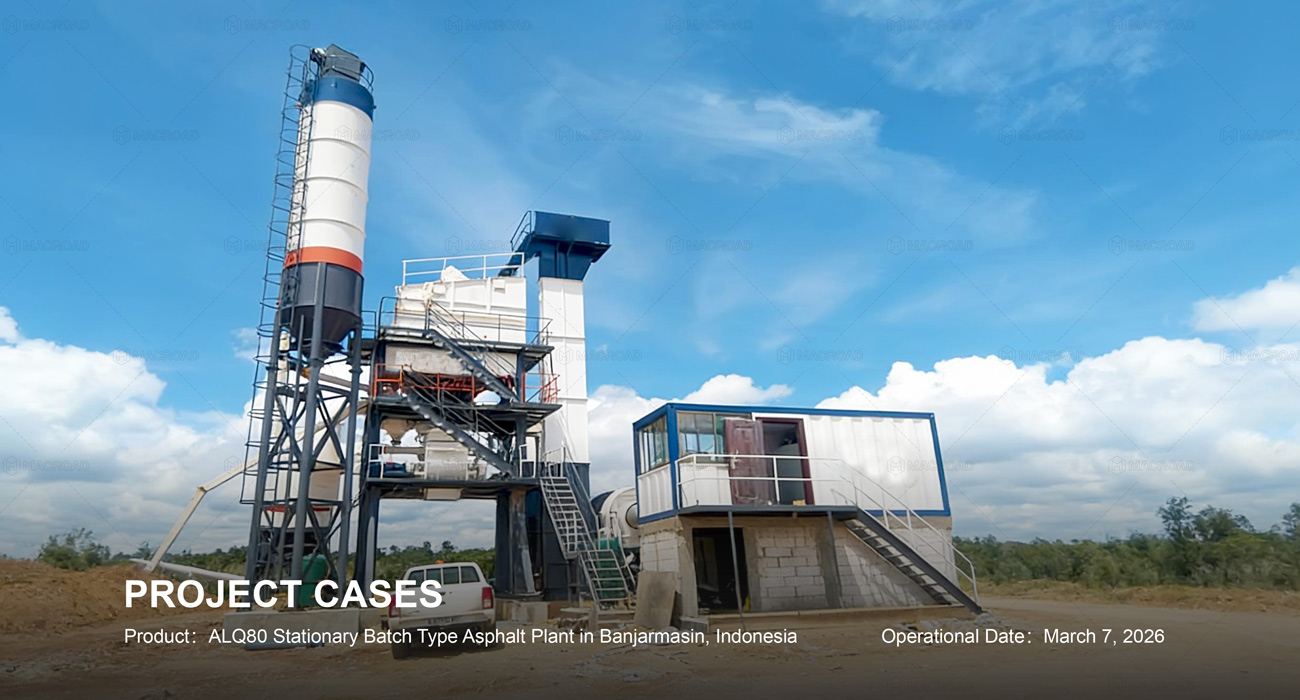
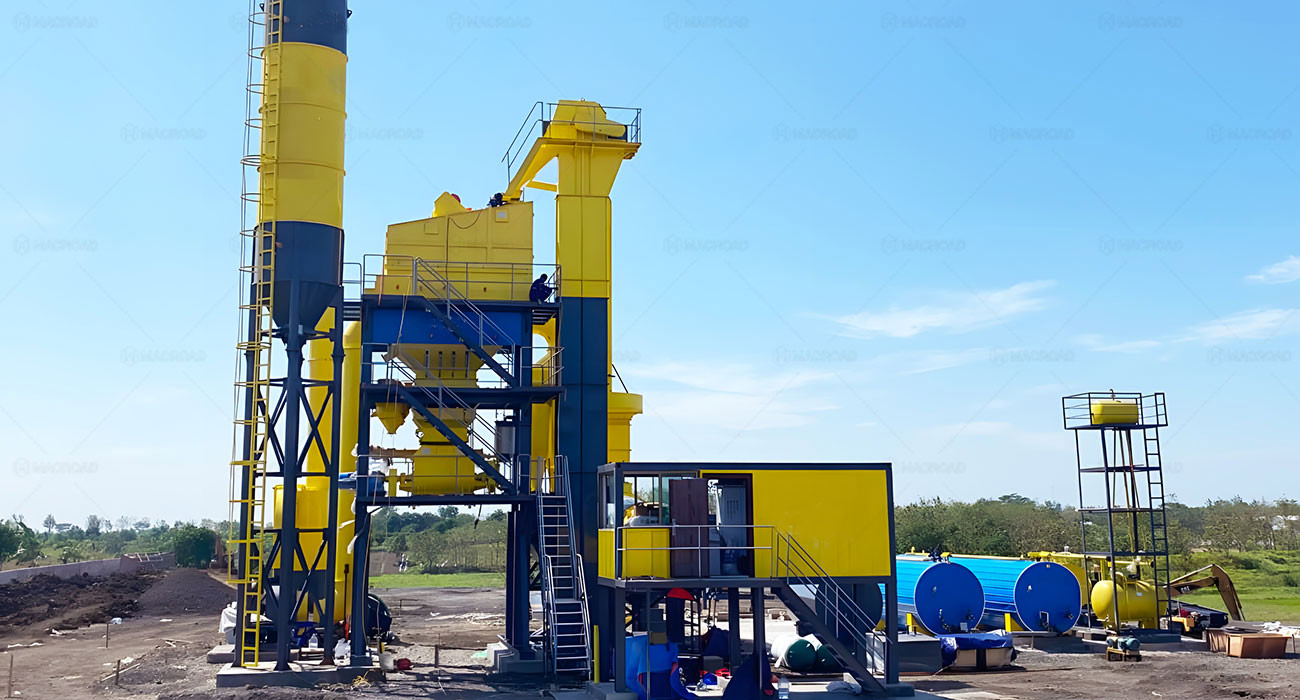
Modular skid-mounted framing eliminates this dependency entirely, requiring only leveling pad preparation consuming 60 to 90 cubic meters concrete or, in many configurations, compacted gravel surfaces meeting minimum bearing capacity specifications. This reduction directly lowers the effective harga asphalt mixing plant setup investment by removing $70,000 to $110,000 in foundation-related expense that fixed-frame alternatives require across typical highway construction deployments.
In light of these savings, regional contractors evaluating harga asphalt mixing plant proposals must request itemized cost breakdowns separating equipment price from installation expense, since foundation-free modular designs frequently justify higher baseline equipment cost through dramatically reduced total deployment expenditure and accelerated timeline to production readiness.
Manufacturer Support Strengthens Local Deployment Confidence
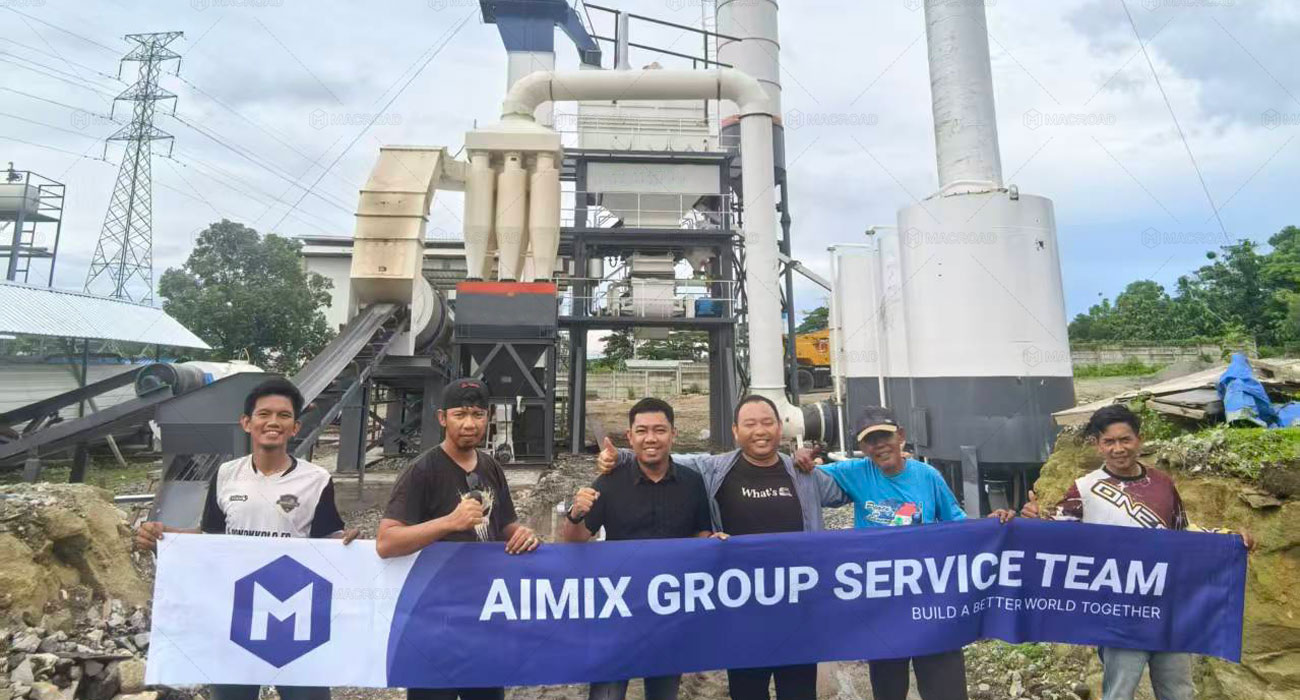
Selecting among asphalt mixing plant manufacturers for Indonesian highway construction programs should include verification of local technical support infrastructure, since remote deployment locations cannot rely solely on overseas engineering teams for commissioning and troubleshooting. Macroad – road construction machinery manufacturer – maintains a dedicated customer service center within Indonesia, enabling faster response for installation supervision, spare parts availability, and operator training across archipelago project sites.
This regional presence directly affects harga asphalt mixing plant value calculation, since equipment requiring overseas technician deployment for commissioning adds substantial cost and multi-week delay compared to manufacturers offering local engineering support. Consequently, engineering firms evaluating asphalt plant for sale options should explicitly weigh after-sales service infrastructure alongside equipment specifications, recognizing that genuine operational readiness depends on accessible technical support throughout extended highway construction programs.
Conclusion
Evaluating heavy-duty asphalt plant for sale options for remote Indonesian highway construction requires rigorous specification of modular shipping dimensions that overcome archipelago transport constraints, alongside foundation-free framing that fundamentally improves harga asphalt mixing plant investment economics. International asphalt mixing plant manufacturers demonstrating both engineering sophistication and local Indonesian support infrastructure, including Macroad – road construction machinery manufacturer‘s regional customer service presence, provide genuine deployment confidence that distant suppliers cannot match across dispersed regional highway networks.