When comparing rubber tired gantry cranes (RTGs), buyers often focus on the purchase price, rated capacity, and lifting height. These are important, but they do not determine what an RTG will cost to operate over the next 10 or 15 years.
Two RTGs with the same 40-ton lifting capacity can have noticeably different operating costs. One may consume more fuel because of an oversized diesel generator. Another may require more tire replacements because of poor steering control or frequent sharp turns. A crane with a more complicated electrical system may cost more to maintain, but it could also reduce fuel consumption and improve availability.
For this reason, rubber tired gantry crane configuration should be evaluated as a long-term operating decision rather than simply a specification list.
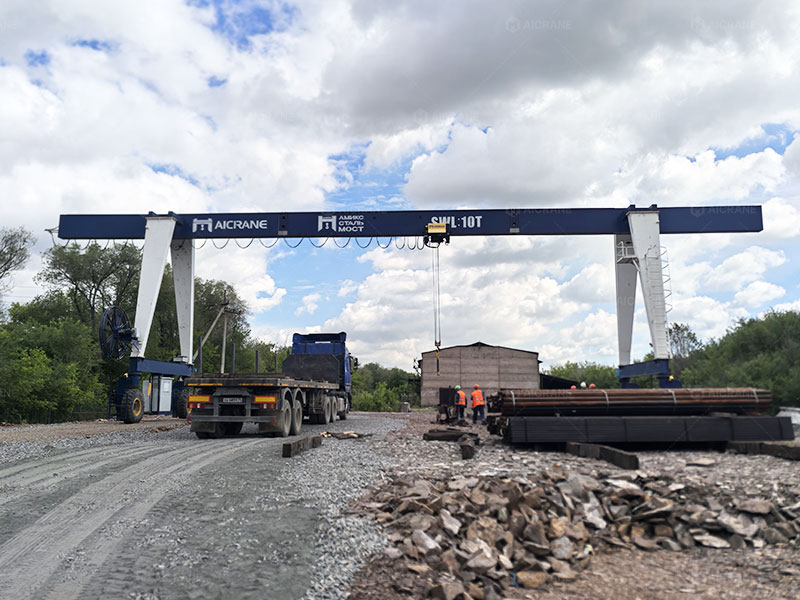
What Is Included in an RTG Configuration?
An RTG configuration includes the mechanical, electrical, power, control, and mobility systems selected for a particular yard.
Key configuration choices include:
- Lifting capacity
- Crane span and lifting height
- Diesel-electric or electric power supply
- Generator capacity
- Cable reel or external power connection
- Hoist and motor selection
- Variable frequency drive (VFD) control
- Steering system
- Tire type and size
- Crane travel speed
- Spreader configuration
- Operator control system
- Safety and monitoring equipment
Each choice affects a different part of the operating budget.
For example, a larger generator can provide additional power margin, but it may consume more fuel when operating below its optimal load. Similarly, a higher travel speed can improve productivity, but aggressive acceleration and braking may increase tire and drivetrain wear.
The cheapest configuration at the quotation stage is therefore not necessarily the cheapest configuration to operate.
Generator Size Has a Direct Effect on Fuel Consumption
For diesel-powered RTGs, the generator is one of the most important operating-cost factors.
The generator must supply power for the hoisting, trolley, gantry travel, steering, spreader, lighting, control systems, and auxiliary equipment. However, these systems do not continuously operate at maximum load.
Consider an RTG container gantry crane that normally handles 20-30 ton containers but occasionally needs its full rated capacity. If the generator is selected only around the maximum theoretical electrical load, it may operate at relatively low load during much of the working day.
Diesel engines generally become less efficient when operated for long periods at very low loads. An oversized generator can therefore increase fuel consumption without providing a meaningful productivity benefit.
A better approach is to calculate the actual operating profile:
- Average container weight
- Number of lifts per hour
- Average lifting height
- Average travel distance
- Hoisting time per cycle
- Travel time per cycle
- Simultaneous motor operation
- Auxiliary electrical load
- Expected peak load
This information allows the generator to be sized around the real duty cycle instead of simply selecting a large unit for maximum capacity.
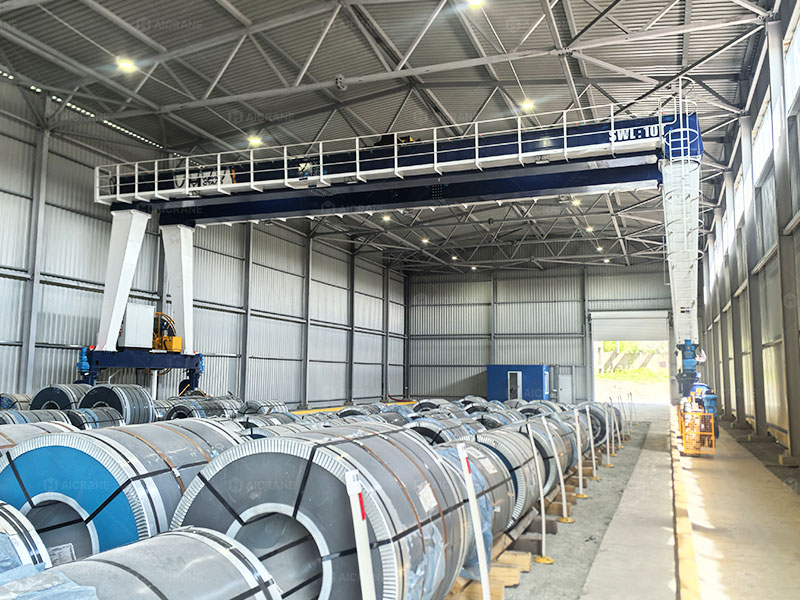
Electric RTG Configuration Can Change the Cost Structure
An electric RTG eliminates or reduces dependence on onboard diesel generation, but the power supply arrangement becomes a major consideration.
Cable reel systems, conductor systems, and other external power solutions can provide electricity directly to the crane. This can significantly reduce fuel consumption and engine-related maintenance.
However, the infrastructure required for electric operation has to be considered.
For example, a cable-powered RTG may require suitable connection points and a travel path that accommodates the cable. If the yard layout changes frequently, cable management can become a practical limitation.
The correct comparison is therefore not simply:
Diesel RTG vs. Electric RTG
Instead, the operator should compare:
Fuel cost + engine maintenance + emissions-related requirements
against:
Electricity cost + power infrastructure + cable system maintenance
The cheaper option depends on local electricity and diesel prices, operating hours, yard layout, and the availability of electrical infrastructure.
Hoisting Speed Influences Productivity and Energy Use
The hoisting system has a direct effect on the number of containers an RTG can handle during a shift.
Suppose two cranes have the same 40-ton rated capacity, but one has a higher lifting speed. If the crane performs hundreds of lifting cycles per day, even a small reduction in lifting time can affect total productivity.
However, maximum hoisting speed should not be considered independently.
A crane that accelerates quickly and operates at high speed may use more energy during repeated cycles. In container handling, the actual productivity benefit depends on the entire cycle:
Lift → trolley movement → lowering → container positioning → hoist up → return movement
If trolley or travel time dominates the cycle, increasing hoisting speed alone may produce little improvement.
This is why RTG configuration should be based on cycle-time analysis rather than individual motor speeds.
VFD Control Can Reduce Mechanical Stress
Variable frequency drive (VFD) control is widely used for RTG hoisting, trolley travel, and gantry travel.
Instead of switching motors directly between stopped and full-speed conditions, VFDs allow controlled acceleration and deceleration.
This affects operating costs in two ways.
First, smoother acceleration can reduce mechanical shock on gears, couplings, wheels, brakes, and structural components.
Second, variable-speed operation allows the movable gantry crane to use different speeds for different operating conditions.
For example, the operator can use a higher travel speed when moving an empty spreader across an open yard and reduce speed during final container positioning.
The financial benefit is not necessarily a dramatic reduction in electricity consumption. In many applications, the more important benefit is reduced wear and better control.
If smoother operation extends the service life of drivetrain components or reduces brake and wheel maintenance, the savings accumulate over years.
Steering Configuration Affects Tire Costs
Tires are a recurring expense for RTG operators.
An RTG operates on rubber tires rather than fixed rails, which gives it flexibility but also creates additional maintenance requirements.
Poor wheel alignment, inaccurate steering control, excessive turning, and aggressive driving can accelerate tire wear.
For example, an RTG that frequently changes direction between container rows may experience considerably more tire stress than a crane operating on a long, consistent travel path.
The steering system should therefore match the yard’s operating pattern.
Accurate steering control can help keep the wheels aligned with the intended travel direction. This reduces unnecessary lateral forces and can improve tire life.
For a large fleet, the financial effect can be significant. A small improvement in tire service life becomes substantial when multiplied across eight tires, several cranes, and many operating years.
Tire Selection Is More Than a Purchase Price
Choosing tires solely according to initial price can create a false economy.
RTG tires operate under high loads and repeated acceleration, braking, and steering. Tire selection should consider:
- Rated load
- Operating speed
- Yard surface
- Temperature
- Average daily operating hours
- Turning frequency
- Tire pressure requirements
- Availability of replacement tires
- Expected service life
A cheaper tire that requires replacement more frequently may have a higher cost per operating hour than a more expensive tire with a longer service life.
Operators should track tire cost using a practical metric such as:
Tire cost per operating hour
or
Tire cost per container move
This gives a better basis for comparing configurations than the purchase price of individual tires.
Crane Span Can Affect Both Productivity and Energy Consumption
RTG span is normally selected according to the number of container rows and truck lanes that the crane needs to cover.
A larger span can allow the crane to serve more positions without relocating. This can improve yard utilization.
However, increasing the structural span also adds weight to the crane and may increase the energy required for movement.
The correct span should therefore be based on the yard’s actual container layout.
For example, if a crane only needs to serve six container rows, designing a significantly wider structure may add cost without providing a corresponding operational benefit.
On the other hand, a span that is too small may force the RTG to relocate more frequently, increasing travel time, tire wear, and fuel or electricity consumption.
The lowest long-term cost usually comes from matching the span to the container stacking plan rather than maximizing the physical coverage area.
Lifting Height Should Match Container Stacking Requirements
Lifting height also affects configuration cost.
A crane designed for four-high container stacking does not necessarily need the same lifting height as one designed for five-high or six-high stacking.
Increasing lifting height can require longer ropes, additional structural clearance, and different hoisting arrangements. It can also increase the time required for certain lifting cycles.
At the same time, insufficient lifting height can limit yard capacity and force operators to reorganize containers.
The correct question is not:
“What is the highest lifting height available?”
It is:
“What lifting height is required for the planned stacking configuration?”
This distinction helps prevent both over-specification and operational limitations.
Automation and Monitoring Can Affect Maintenance Costs
Modern RTGs can be equipped with sensors and monitoring systems for load conditions, travel position, steering, engine performance, and other operating parameters.
These systems add upfront cost, but they can provide useful maintenance information.
For example, monitoring abnormal motor temperature or repeated overload conditions can help maintenance teams identify problems before they become major failures.
Remote monitoring can also reduce troubleshooting time when a fault occurs. Instead of inspecting every system manually, technicians can review recorded operating data and identify the likely source of the problem.
For fleets with many RTGs, the value of monitoring becomes more significant because maintenance teams can compare operating data across multiple machines.
Safety Configuration Can Reduce Indirect Costs
Safety equipment is sometimes viewed only as a compliance requirement, but it also has an economic effect.
Features such as overload protection, emergency stop systems, anti-collision detection, travel limit protection, and container position monitoring can reduce the likelihood of equipment damage and operational incidents.
An accident involving a container or crane can result in much higher costs than the original safety equipment.
Potential indirect costs include:
- Equipment repairs
- Container damage
- Yard downtime
- Cargo delays
- Labor costs
- Emergency maintenance
- Lost handling capacity
Therefore, safety configuration should be evaluated against the cost of potential downtime rather than treated only as an additional option.
Maintenance Access Should Be Considered During Design
A configuration that is easy to maintain can reduce long-term labor costs.
Components such as motors, brakes, electrical cabinets, cable reels, hydraulic systems, and control equipment should be accessible for inspection and replacement.
If technicians need to remove several unrelated components before reaching a frequently serviced part, maintenance takes longer.
This is especially important for RTGs operating for long shifts. A maintenance task that takes two hours instead of one hour may seem insignificant for a single repair, but the difference becomes substantial across hundreds of service events.
Good configuration should therefore consider not only whether a component works, but also how technicians will inspect, adjust, repair, and replace it during the crane’s service life.
Evaluate RTG Configuration Using Total Cost of Ownership
A useful RTG cost model should include more than the initial purchase price.
A simplified total cost of ownership calculation can include:
TCO = Purchase Cost + Energy/Fuel + Tires + Maintenance + Spare Parts + Labor + Downtime Costs
The exact weighting of these categories depends on the yard.
For a diesel-powered RTG operating 5,000 hours per year, fuel may become one of the largest recurring expenses. For an electric RTG, electricity and infrastructure costs become more important.
For a heavily used crane, tire and drivetrain wear may have a larger impact than for a low-utilization machine.
This is why there is no universally cheapest RTG configuration.
Choosing the Configuration Based on the Yard
The best RTG configuration starts with the operating conditions.
A buyer should provide the gantry crane manufacturer with information such as:
- Container handling capacity
- Maximum container weight
- Stacking rows and heights
- Span requirement
- Runway or travel distance
- Containers handled per hour
- Daily operating hours
- Annual operating days
- Yard surface condition
- Power availability
- Local diesel and electricity prices
- Climate and temperature
- Maintenance capabilities
With this information, the manufacturer can evaluate generator size, drive systems, steering arrangement, tire specifications, lifting speeds, and control functions according to actual requirements.
The objective is not to build the most heavily equipped RTG possible. It is to build an RTG that delivers the required handling capacity without carrying unnecessary operating costs for the next decade.
Final Considerations
RTG operating costs are determined by hundreds of small decisions made during the configuration stage.
Generator sizing affects fuel consumption. Power supply affects energy costs and infrastructure requirements. VFD control affects acceleration, positioning, and component wear. Steering configuration affects tire life. Span and lifting height affect both productivity and energy use. Monitoring and safety systems can reduce downtime and equipment damage.
For this reason, RTG selection should be based on cost per operating hour and cost per container move, not just the equipment quotation.
A well-configured rubber tired gantry crane may cost more initially while producing lower fuel, tire, maintenance, and downtime costs over its service life. Conversely, an apparently inexpensive configuration can become expensive if it is poorly matched to the yard’s operating pattern.
The most economical RTG is therefore not necessarily the one with the lowest purchase price. It is the one whose configuration matches the yard closely enough to deliver the required productivity with predictable long-term operating costs.